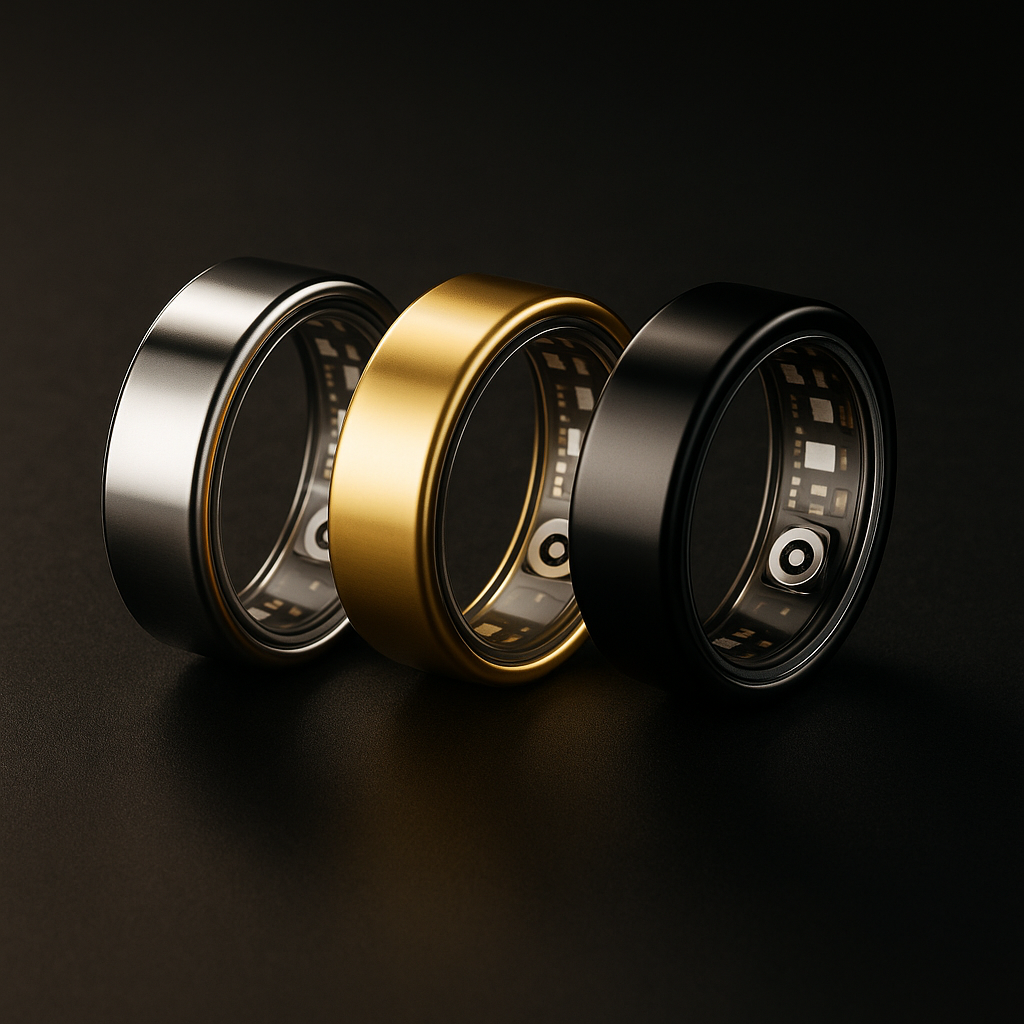
Smart rings have transformed health tracking into an almost invisible gesture: we wear them 24/7, they observe our micro-variations in physiology, and in the morning we receive a dashboard that seems to tell the story of our body during the night. Among these indicators, HRV—heart rate variability—has become the darling of athletes and those concerned about their recovery. Yet, HRV is often misunderstood: it's not a diagnosis, nor a magic bullet, but an indirect marker of the balance between workload and recovery. This article clarifies what a smart ring actually measures at night (heart rate and its variability, skin temperature, movement), how these signals are used to estimate sleep and recovery, where the limits lie, and how to build a simple and actionable routine to decide when to push your training, when to ease off, and how to protect your sleep.
Table of Contents
- VFC: a simple definition and misconceptions to forget
- How a ring measures HRV and sleep (optics, actigraphy, temperature)
- Useful nighttime lessons: Resting heart rate, HRV (RMSSD), temperature and regularity
- What can be interpreted... and what should be avoided
- Sleep: How reliable are the stage estimates? What you really need to track
- Linking training load and recovery: a 4-step protocol
- Factors that affect HRV and sleep (and how to control them)
- Good wearing and calibration practices (2–3 weeks)
- Quick FAQ on FCV, sleep, and rings
- Conclusion + actionable checklist
VFC: a simple definition and common misconceptions to forget
Heart rate variability (HRV) describes the micro-differences between two successive heartbeats. Measured in milliseconds using indices like RMSSD, it partly reflects the activity of the autonomic nervous system, particularly the parasympathetic nervous system (the 'recovery mode'). The higher the HRV (with comparable profiles and contexts), the more reserve the body seems to have. But HRV has three often overlooked characteristics: (1) it varies enormously between individuals; a 'good' HRV is first and foremost your reference HRV, not your neighbor's; (2) it naturally fluctuates throughout the day and from one night to the next, even without a change in training; (3) it is sensitive to context (alcohol, early-stage illness, stress, menstrual cycle, jet lag, lack of sleep). Consequently, HRV should be interpreted as a trend, not an absolute value, and always with a touch of humility.
Common misconceptions to forget: 'low HRV = poor health' (false out of context), 'HRV tells you exactly when to get sick' (no, it can only suggest a disturbance), 'a sleep score is the truth' (it's a useful estimate, not a polysomnography). Heart rate monitoring rings make HRV actionable because they measure at night, within a relatively stable window (less movement, more constant room temperature), which improves the comparability of sleep patterns.
How a ring measures HRV and sleep (optics, actigraphy, temperature)
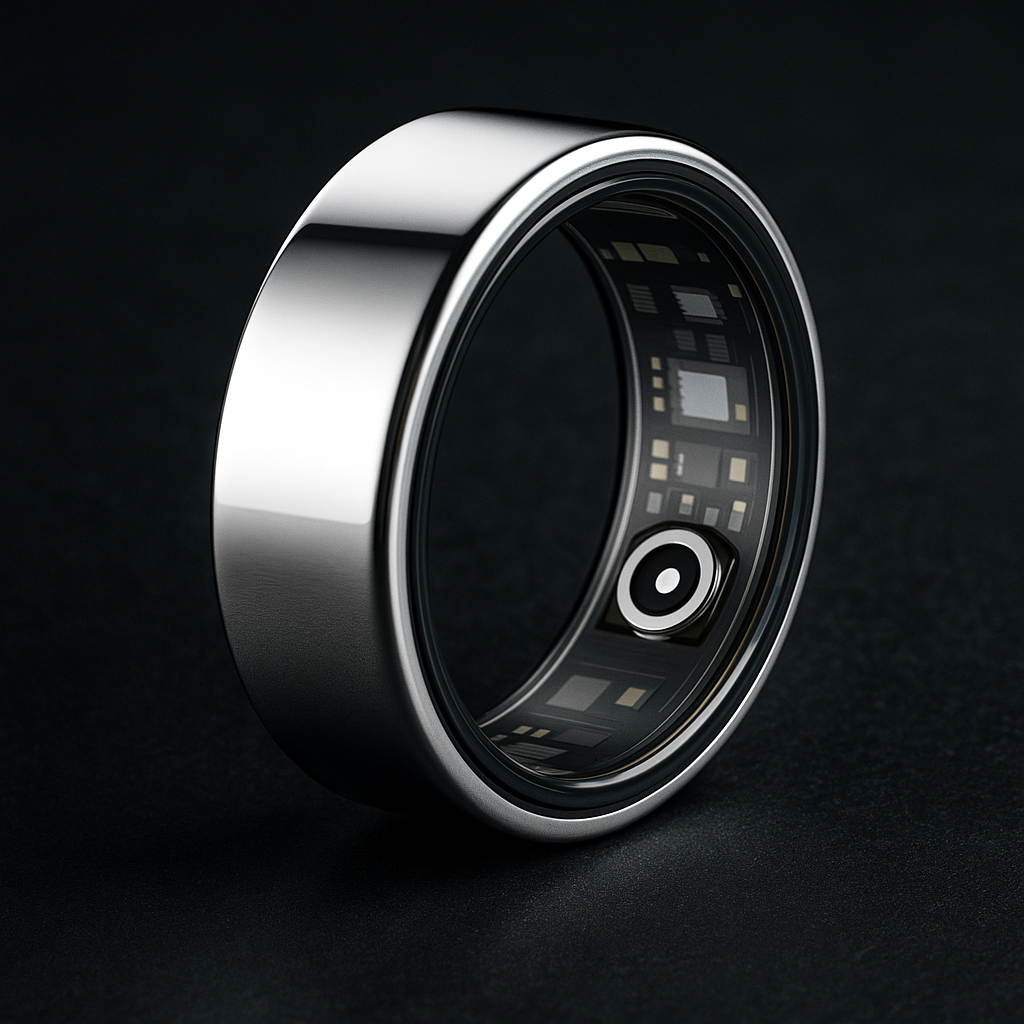
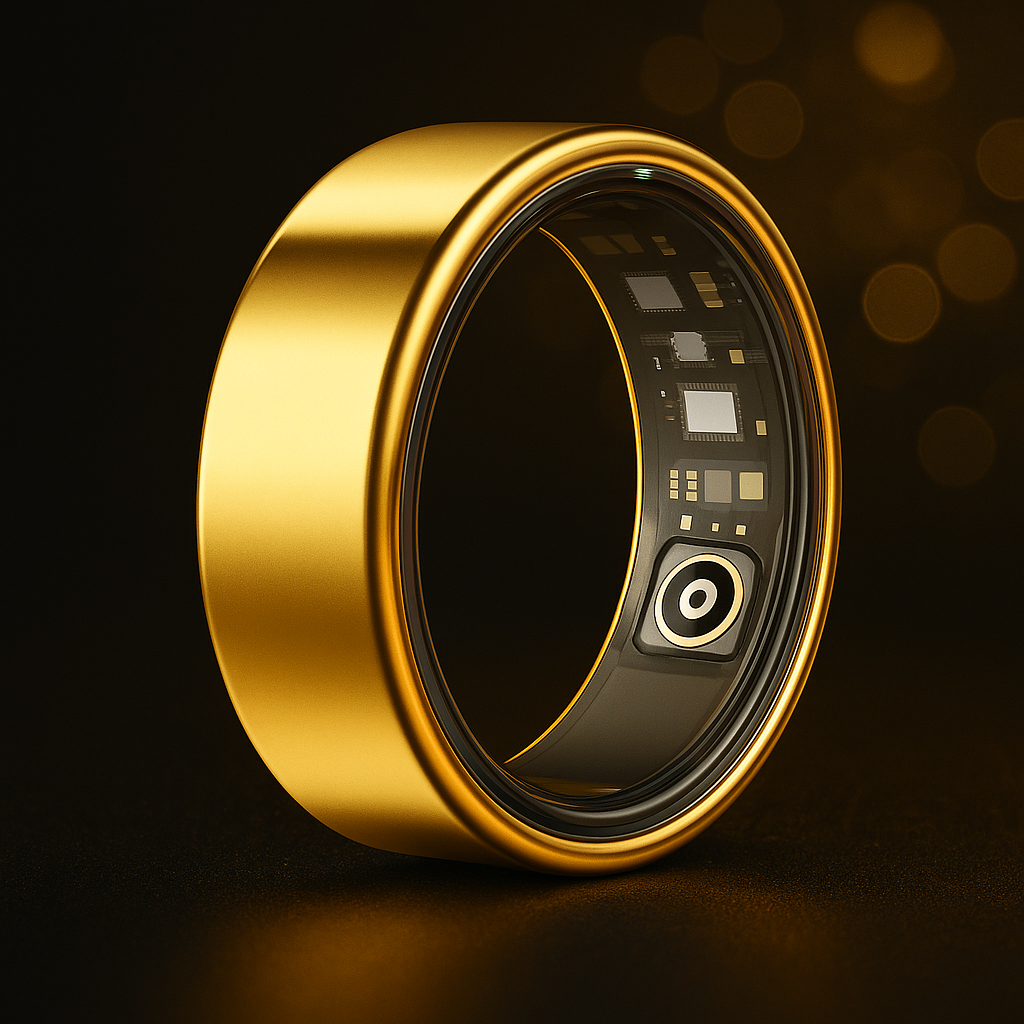
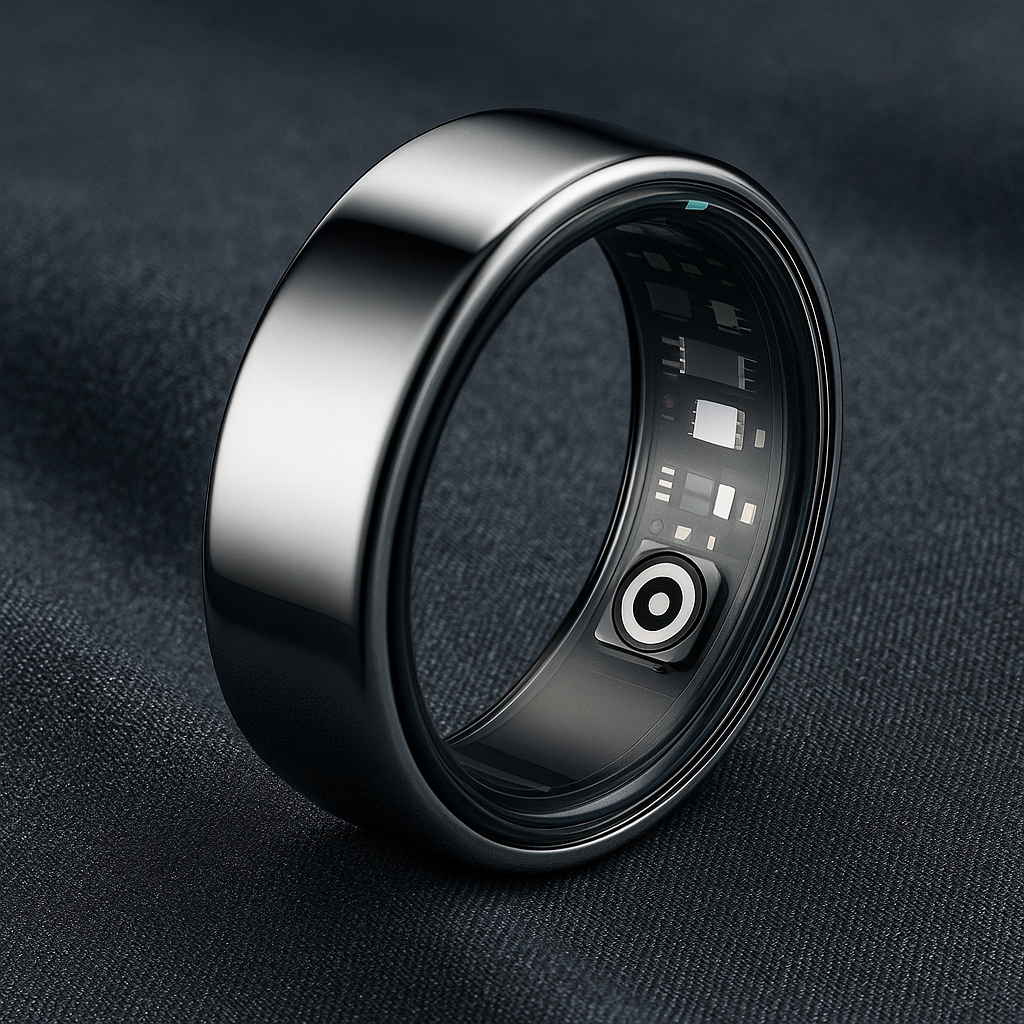
The rings use small optical sensors (PPG, for photoplethysmography) that illuminate the skin and measure, through variations in light absorption, changes in blood volume with each heartbeat. By processing this signal, the heart rate and the intervals between beats are estimated, which are necessary for calculating HRV (often nocturnal RMSSD). The finger is an ideal location: the signal is regular, the ring is worn continuously, and the contact is stable throughout the night. The devices supplement this signal with actigraphy (a triaxial accelerometer that detects movement) and, on some models, a measurement of relative skin temperature. The algorithm combines these sources to infer sleep duration, probable awakenings, and sometimes an estimate of sleep stages (light, deep, REM).
Important: PPG is not an ECG. It is more sensitive to artifacts (movement, stray light, poor positioning). Algorithms mitigate this noise by filtering, removing unstable segments, and averaging over longer windows. The final result is not 'perfect', but robust enough to track trends: nighttime rest, residual charge, transient disturbances.
Useful lessons from the night: Resting heart rate, HRV (RMSSD), temperature and regularity
Three nocturnal indicators form a pragmatic triptych: (1) the lowest resting heart rate (RHR) of the night, (2) nocturnal HRV (usually average RMSSD), and (3) relative skin temperature. A higher-than-usual RHR and an HRV lower than your baseline often signal increased workload or incomplete recovery. An unusual elevation in skin temperature may indicate physiological stress (onset infection, menstrual cycle phase, late-night alcohol consumption) that explains cardioautonomic drift.
Regularity is just as important as quality: consistent nights (bedtime, duration, environment) stabilize the signal, make heart rate variability (HRV) more readable, and facilitate decision-making. Conversely, a very late bedtime, a heavy meal, or alcohol consumption raises resting heart rate (RHR), lowers HRV, and impairs sleep fragmentation. Physiology cannot be "cheated": a good score primarily stems from a healthy lifestyle.
What can be interpreted… and what should be avoided
Here's a reliable approach: read the weekly trend for HRV and HRCR; compare one night to the previous two weeks; cross-reference with training volume/intensity, mental workload, and perceived exertion. Use simple qualitative zones: 'green' (within the normal range), 'orange' (below your average), 'red' (significantly degraded). An 'orange' day doesn't require complete rest, but suggests reducing intensity or focusing on technique. A 'red' day calls for easing off, optimizing hydration and sleep, and monitoring for clinical signs (unusual muscle soreness, irritability, scratchy throat).
What to avoid: drawing medical conclusions (diagnoses) based solely on HRV; comparing your readings to others; panicking over a single night (false positives exist); making multiple simultaneous changes (you lose track of what worked). HRV is not a medical examination and does not replace the advice of a healthcare professional.
Sleep: How reliable are stage estimates? What you really need to track
Sleep rings estimate sleep stages using models that combine movement and heart rate signals. Compared to polysomnography, the accuracy of stage estimation varies; it is generally more reliable for total sleep duration and sleep onset/wake-up time than for the precise breakdown between stages. The temptation is strong to overinterpret the percentage of deep sleep. Resist this: what is most actionable on a daily basis is (1) regularity (bedtime/wake-up time), (2) duration (your baseline sleep duration), (3) fragmentation (likely awakenings), and (4) consistency with how you feel upon waking. Keep an eye on your relative skin temperature, which can explain an unusual night (overheated room, underlying fever).
A good protocol: establish a stable sleep schedule (e.g., 11 p.m.–7 a.m.), ventilate/cool the bedroom, eat a light dinner at least 2–3 hours before bedtime, and establish a wind-down ritual (soft lighting, minimal mental load, no late-night alcohol). Sleep rings don't create sleep; they make the consequences of our habits visible.
Linking training load and recovery: a 4-step protocol
Step 1 — Personal Baseline (2 to 3 weeks)
Wear the ring day and night without changing much. Briefly note how you feel, your workload (time/intensity), and let the algorithm collect heart rate variability (HRV), temperature, and sleep data. This period builds your 'baseline'.
Step 2 — Daily traffic lights
Each morning, assess your current state: 'green' if HRV and HRR are within your usual range and you feel good; 'orange' if one indicator drops slightly or you had a short sleep; 'red' if HRV is clearly below baseline + HRR is higher + you feel unwell. In other words: green = planned workout; orange = reduce intensity, focus on technique or easy endurance; red = active recovery, mobility, walking and hydration, possibly a short nap.
Step 3 — Weekly Feedback
Over the weekend, compare your training load tendencies with real life (stress, travel, diet). Adjust the following week: aim for a maximum of +1 recovery lever (sleep, nutrition, mobility) and +1 performance lever (intensity/volume) at a time.
Step 4 — Anticipating stress peaks
Before traveling, competing, or going through a busy period, prioritize regular sleep and hydration. The goal isn't to achieve the highest HRV (heart rate variability), but to avoid significant dips and arrive with a stable physiological state.
Factors that affect HRV and sleep (and how to control them)
Insufficient sleep: chronic sleep deprivation lowers heart rate variability (HRV), increases resting heart rate (RHR), and makes training more taxing. Action: maintain a fixed bedtime, limit bright screens, and keep your bedroom cool.
Late-night alcohol consumption raises body temperature and heart rate, decreases heart rate variability, and disrupts sleep. Action: avoid or limit it, and never use it as a sleep aid.
Disease and inflammation: HRV frequently drops, HRC rises. Action: relative rest, hydration, medical advice if symptoms persist.
Menstrual cycle: hormonal variations that modulate temperature and HRV. Action: follow your personal patterns, adjust your load during the sensitive phase.
Hydration and nutrition: Dehydration and heavy late meals will disrupt sleep. Action: Drink regularly, eat a light dinner early enough.
Psycho-social stress: rumination and hypervigilance disrupt sleep. Action: a relaxation ritual (breathing exercises, light reading, low lighting).
Jet lag and time zone changes: shift the clock, disrupt the HRV. Action: morning light, short naps, anchoring meals to a specific time.
Training: high intensity or unusual volume = transient decrease in HRV, increase in HRCR. Action: alternate workloads and planned recovery periods.
Good wearing and calibration practices (2–3 weeks)
Continuous wear: the more you wear the ring, the more reliable the trends. Ideally: 24/7, including at night (IP rating and comfort allow for this depending on the model).
Adjustment: the ring must be well adjusted, neither too loose (movement artifacts), nor too tight (discomfort, circulation).
Night window: aim for regular hours; avoid late meals/alcohol; refresh the room.
Calibration: Initially, wait 14–21 nights before 'judging' your numbers. Compare yourself to your own data, not to a population average.
Weekly reading: smooth the HRV with a moving average; look especially at the alignment between data and sensations.
Interoperability: If you use a watch for sports and a ring for nighttime, centralize your data (iOS/Android health) to keep context.
Quick FAQ on FCV, sleep, and rings
Can HRV prevent injury?
Not directly. It indicates an unbalanced load/recovery ratio. The risk of injury depends on a number of factors (mechanics, volume, history, technique).
Should I be worried about a 'low' HRV this morning?
Observe the trend over 1–2 weeks and how you feel. A single night of sleeplessness is not cause for concern if it is not accompanied by symptoms.
Are the sleep stages reliable?
These are estimates. The total duration and schedule are more reliable than the stadium breakdown. Use them as guidelines, not as definitive answers.
Should we aim for the highest possible HRV?
No. Seek stability that fits with your life. Extreme HRV is not the goal; consistency is.
I run with a watch: is a ring really necessary?
Yes, because it follows the night without disturbing, captures a more stable HRV and complements your training load with a continuous recovery measurement.
Conclusion + actionable checklist
A smart ring makes simple yet powerful signals visible: heart rate variability (HRV), nighttime HRV, temperature, and movement. Used systematically—personal baseline, trend analysis, traffic light system, weekly review—this data allows for better training calibration and sleep protection. Stay on track: regular sleep hygiene is worth more than obsessing over race results; a smoothed HRV is better than a single isolated value. The goal isn't 'physiological perfection,' but consistency that fits into your lifestyle.
Quick checklist:
- 24/7 Port
- 2–3 weeks of calibration
- Bedtime ritual, cool room
- Limit late-night alcohol consumption and heavy meals
- Traffic lights to adjust today's session
- Weekly review to learn your patterns
- Centralize the data to maintain context
Looking for discreet, comfortable, and subscription-free 24/7 tracking? A modern smart ring offers the right compromise: sufficient accuracy for trends, multi-day battery life, comfortable nighttime wear, and true freedom to disconnect.
Technical sidebar: HRV metrics and analysis pitfalls
In consumer practice, the most common index is RMSSD, sometimes converted to LnRMSSD to smooth the distribution. SDNN (standard deviation of intervals) captures more of the overall variance but is less suitable for short measurement windows and nighttime measurements, which are susceptible to artifacts. Algorithms reject outliers, sometimes interpolate segments, and smooth the values hour by hour. This "cleaning" varies from one manufacturer to another; hence the advantage of sticking with the same device to track its own trends. Avoid combining heterogeneous sources (app A day 1, app B day 2): you mix methods and degrade comparability.
Pay attention to your breathing as well: heart coherence exercises can temporarily raise heart rate variability (HRV), which is not evidence of structural recovery. Nocturnal HRV, measured without conscious effort, remains the most informative baseline for assessing baseline fitness.
Concrete scenarios: interpreting without overreacting
Pre-competition. Slight drift in HRV/RHR expected. If the 10–14 day trend is stable, maintain the strategy: gentle awakening, hydration, familiar breakfast.
After an evening of drinking. Low HRV, high HRC, fragmented sleep: very easy session, morning light, walking, late bedtime.
Early signs of infection. Reduced HRV + high FCR + rising relative temperature: relative rest, hydration, medical advice if symptoms persist.
Intensive training block. If the drift persists despite 1–2 decent nights: very easy day or rest, hydration, sleep priority.
Jet lag / humid heat. Stabilize your schedule, get morning light, and increase hydration; reduce the intensity for a few days.
Build a simple personal score
You can derive a user-friendly home score: 50 = baseline, >60 = green, 40–60 = orange, <40 = red. Add/subtract simple data points (HRV/RHR/sleep/temperature/perceived well-being) to guide today's session.
Tip: 7-day moving average and a brief comment per day: your data starts to make sense.
Common mistakes to avoid
Changing ten things at once. You won't know what helped. Modify one lever per week. Comparing yourself to others. Biology, age, genetics, and context differ. Compare yourself to yourself. Chasing perfection. An imperfect night doesn't negate an underlying trend. Ignoring sensations. Numbers guide, sensations ultimately decide. Forgetting the environment. Room temperature, light, and noise often explain a 'bad' night.
Privacy and data: keeping control
Health data is sensitive. Check how it's collected, stored, retained for a certain period, and exported/deleted. Prioritize exporting (CSV/Apple Health/Health Connect) and keeping costs down. Share only when necessary, not everything.
👉 Discover the Vyraring connected ring without subscription and make your recovery a competitive advantage.